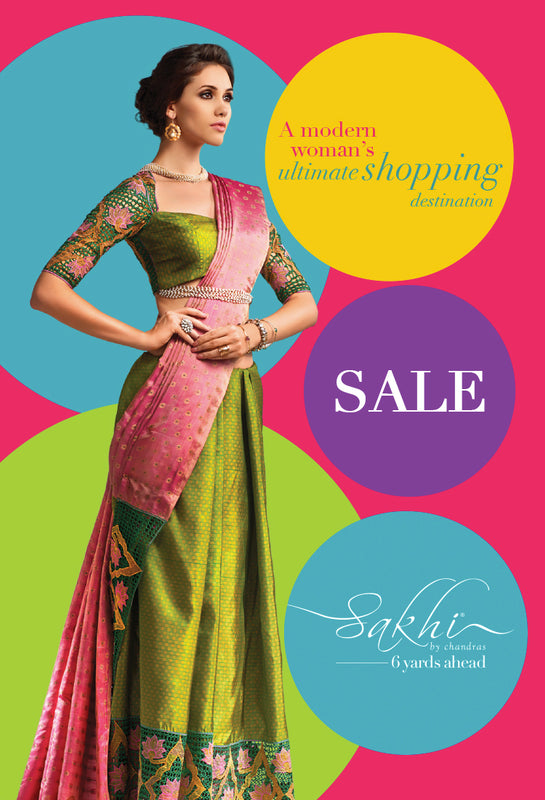

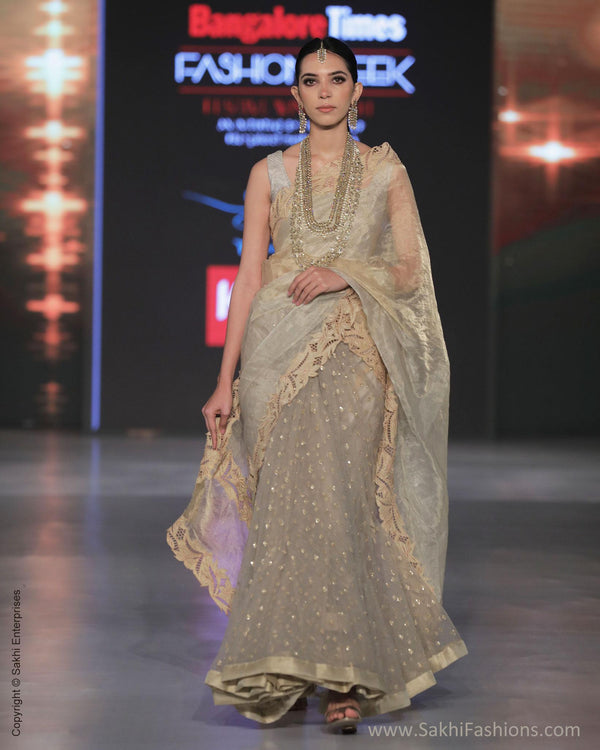
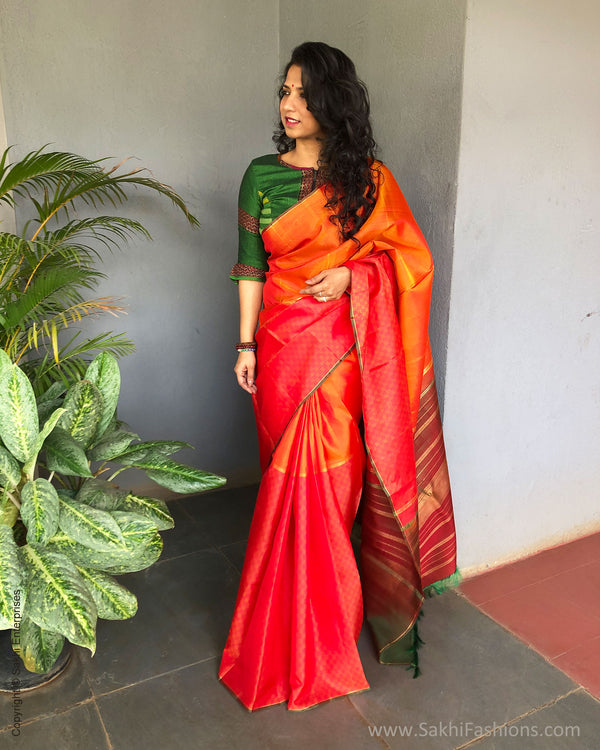
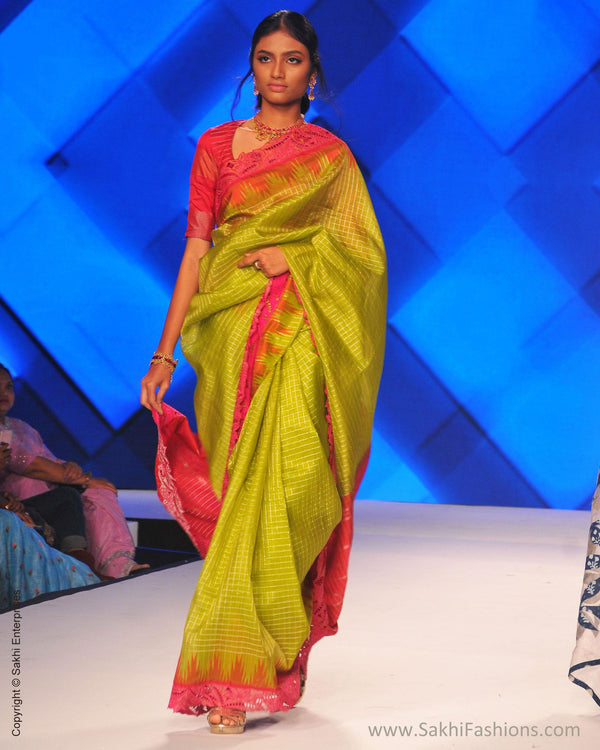
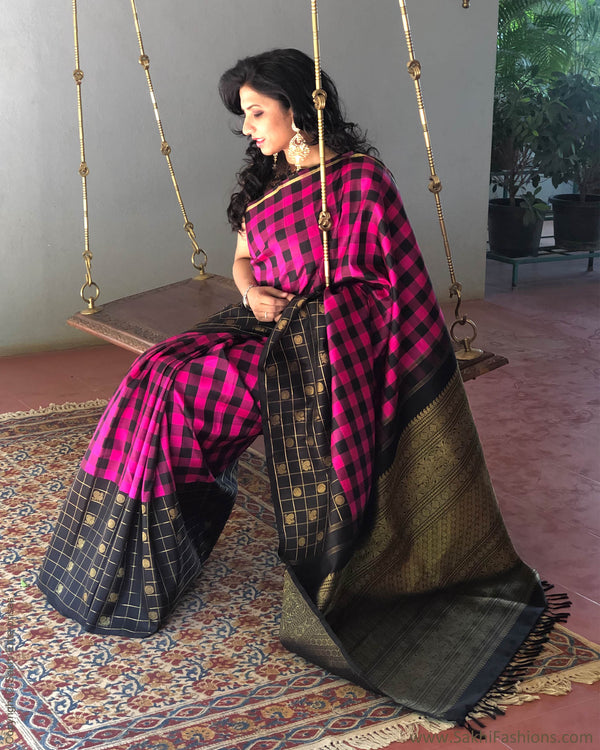
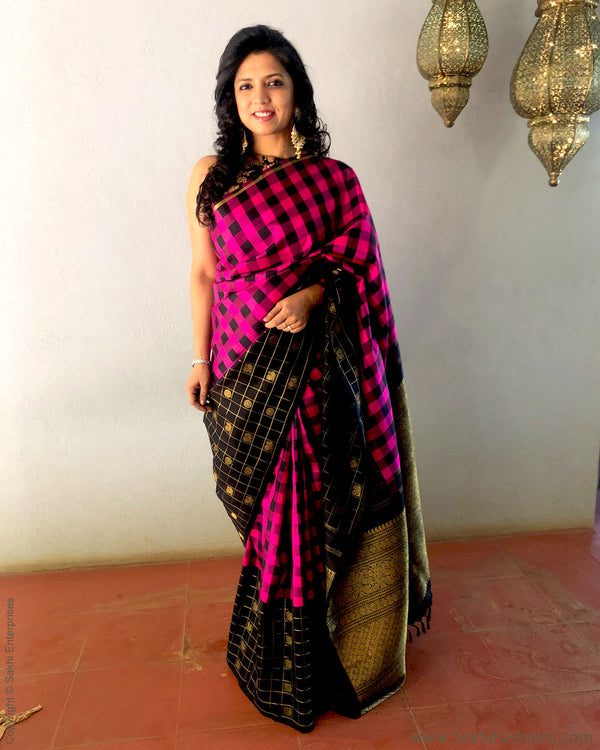
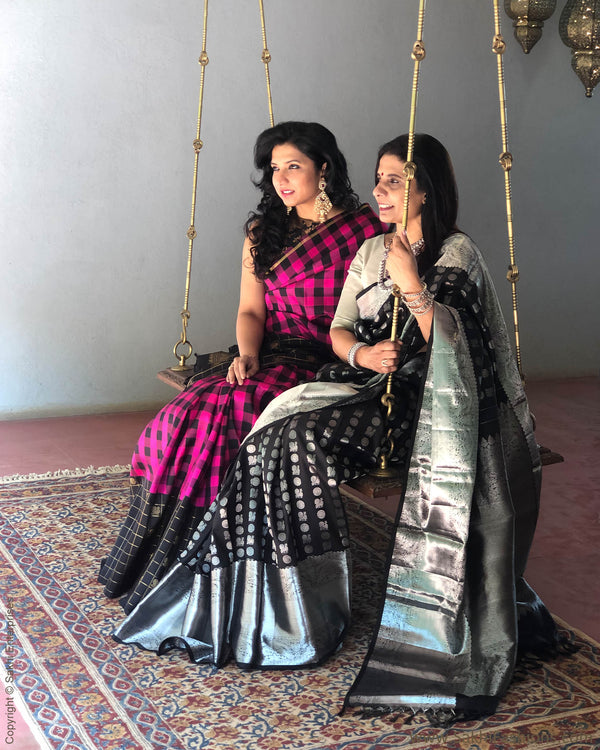
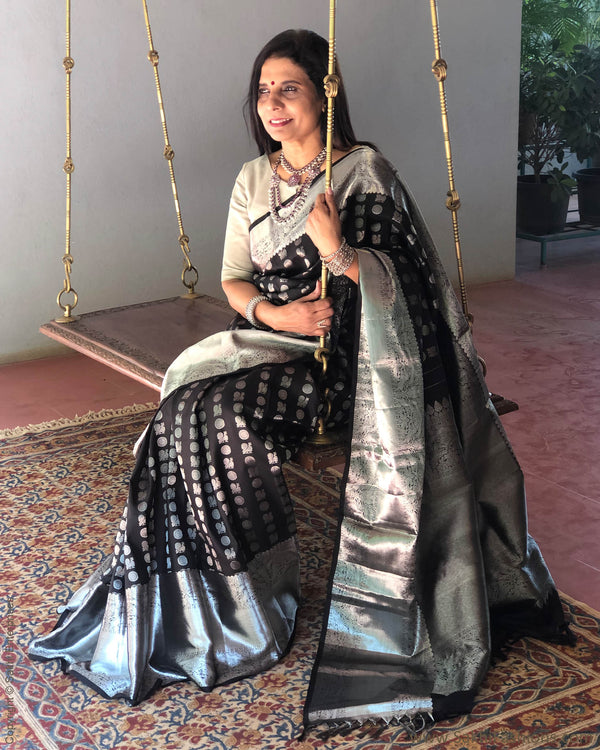
Sakhi is a fast growing fashion outlet founded by the mother-daughter duo of Chandra Rajendran and Neeta. Chandra is a designer with a keen eye for color and passion for design and her daughter Neeta brings a younger dimension to the designs and the brand. Sakhi specializes what they call the "wearable design" - Indian designer sarees and other products that you can wear for multiple occasions with ease and always win a complement. Sakhi is part of Billionways group of ventures.
Chandra's designer boutique has been active for more than 16 years, initially serving a close circle of friends. The popularity of her designs caught up and whenever people wore her designs, heads turned and complements flowed. And when Neeta, with an engineering degree and NIFT diploma in fashion under her belt joined her mother, the mother-daughter combine launched "Sakhi by Chandras" as a new brand in 2005 in Bangalore. From then on, Sakhi has grown into a well-respected brand for Indian woman's clothes today. Sakhi launched its second outlet in Hyderabad and the online shopping site helped reach a global customer base.
Indian fashion is making waves globally. Well known Indian designers like Ritu Kumar, Manish Malhotra, Manish Arora, Satya Paul, Neeta Lulla and others have a large following worldwide. New brands like "Sakhi by Chandras" are fast emerging as designer brands that add to the glamour of Indian designer sarees . Sakhi focuses on designer sarees that are wearable. They are exotic but at the same time elegant. They are unique but at the same time casual.
With a clientele spreading across the world, Sakhi is constantly reinventing itself while not losing its core focus of creating wearable designs for the Indian woman.
Indian Saree has a long and unique history. The word saree is derived from Sanskrit, meaning a strip of cloth. Saree goes back to the Indus Valley Civilisation, which was flourishing during the 2,500 BC. Variously called the Saree and Sari, through the ages this is one garment which has evolved much and also remained the same. It is a garment worn by women in the Indian subcontinent. Apart from India, Bangladesh, Nepal, Bhutan, Srilanka and Pakistan, saree is also very popular in Malaysia, Singapore and Burma.
Saree is a long strip of unstitched garment, about four to nine yards in length worn in different styles. Saris are worn with the plain end concealed inside the wrap, around the waist. Typically, both the borders have styling along the length of the sari. A two to there feet section at the other end, called the Pallu typically elaborates the length-wise styling in more detail. The Pallu is the thrown over the shoulder.
Saree, the universal garment - Demure to Glamorous


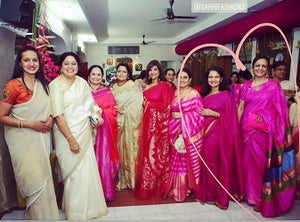
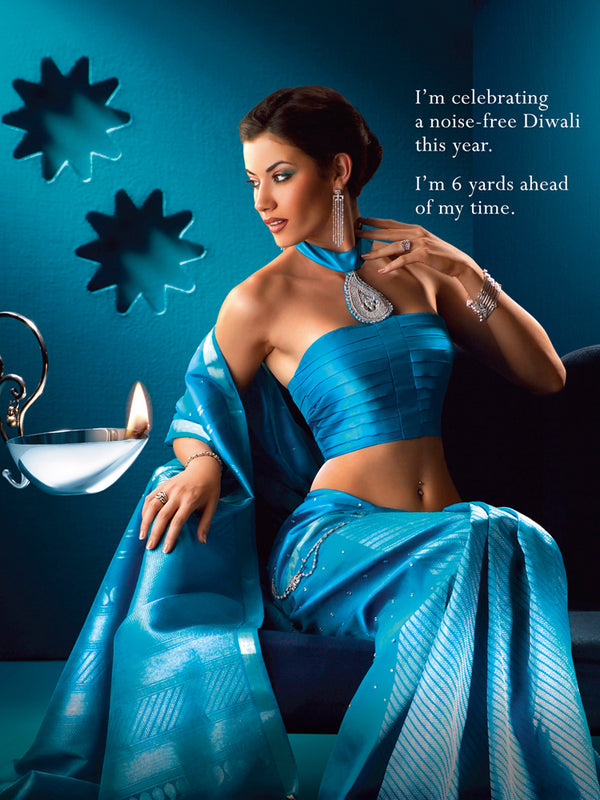
Over the ages, Indian women have continued to wear saree, their traditional dress with great pride. Thanks to Bollywood and modern Indian designers, the saree has transformed itself into a glamorous modern garment. Saree is universal and is amenable to different treatments. Whether it is a modern Indian fashion saree or a daily wear saree, it never fails to surprise you by its amazing versatility. It can make a woman look very demure, gracefully elegant or extremely gorgeous. It is all in the way you wear it. A beautiful sari complements the female figure when worn the right way. Wiith a low cut blouse and a bare midriff, the saree becomes a very glamorous dress - preferred by Bollywood stars. When worn high over the waist with the pallu covering the head, it becomes a demure garment. In between these two extremes come various elegant ways of wearing, making the Indian sari a truly versatile piece that can transform the woman who wears it. No wonder the Indian woman refuses to let go her sari, while the world over women have dropped their traditional forms of dresses and gravitated to the western style.
Fabrics and Craft
The versatility of Saree comes from combining of exquisite Fabrics and beautiful Crafts. Designers have constantly experimented with saree, trying varied fabrics like Kanchivaram, Chiffon, Cotton, Crêpe, Georgette, Lace, Matka, Net, Organza, Tussar and others, combining them with many traditional crafts such as Applique, Badla, Chamki (Sequins), Cut Work, Embroidery, Hand Block Print, Kalamkari, Kundan work, Mirror Work etc. The result is an endless variety of pleasing textures and elegant designs. Some of the crafts are ancient, passed on across generations of talented craftsmen, while some of the fabrics are created by modern technology.
Saree is always in
Popular contemporary film stars like Kareena Kapoor, Katrina Kaif, Vidya Balan, Aishwarya Rai and others make saree their preferred attire by regularly wearing in real life as well as in the Bollywood movies. Ever-green actors like Hema Malini, Sharmila Tagore, Rekha, Vaijayanthi Mala, Madhuri Dixit, Madhubala and others helped make saree an ageless garment by continuing to wear them gracefully. Mrs Gandhi, the powerful prime minister of India and her Italian born daughter-in-law Sonia Gandhi always looked elegant on the Indian Saree at the same time radiating silent power. Most modern airlines stewardesses flying to and from the sub-continent, wear crisp sarees and move around elegantly - living proof that saree can be worn in a busy work place too.
Saree and its accessories
A Saree is usually worn over a Petticoat with a blouse. The blouse is worn with short sleeve and is open at the midriff. To protect the lower edge of the saree, an inner cotton lining called the Fall is fixed and Edging done. Modern women wear it with high or low raised foot wear.
Various saree styles
Chanderi and Maheswari from middle India, Sambalpuri, Tussar, Balucheri, Murshidabad and Kantha from eastern India, Paithani, Bandhani, Kota and Patola from western India, and Kanchivaram, Mysore, Madurai, Mangalgiri, Aarani, Pochampalli, Venkatagiri, Sungudi, Chinnalapattu from South India are a few of the various traditions of distinct fabric motif and wearing styles from India.
Designers Sarees
Contemporary designers have brought creative designs and works in the form of designer sarees. Designer sarees overall keep the wearer standing out in a loud or subtle way depending on the designer's style. Some of the designer sarees can be very flashy and heavy due to the extensive stone work and may be a little difficult to wear for a long time continuously. They may be suitable for glittery occasions. On the other end are designer sarees that are light and "wearable". Sakhi's designer sarees fall in the latter category. They are "any time" sarees that look unique.
Blouse is a tight fitted garment made of matching garment color, worn under the saree. Also called the Choli, it typically has short sleeves. A blouse can be a very versatile garment. At one extreme, worn with longer sleeves and high neck, it is gives a very demure look. When worn sleeveless, with deep low cut neck, it can transform the saree into a very glamorous wear.
A blouse is a custom stitched garment made for the specific measurements of a person. Sarees normally come attached with material for blouse pieces. When you buy a saree, the first thing an Indian woman does is to rush to a tailor to get the blouse stitched.
Sakhi has made it easy for the saree buyer by offering a custom tailoring service. You can order a custom stitched blouse along with your saree, so that when you receive the saree, you also get a blouse custom stitched by an expert tailor, saving you a trip to the local tailor.
Sakhi offers a number of blouse design options to choose from. Please see the measurement section in the Saree product page for details.
Buying designer sarees online has become the new rage today. With online e-commerce becoming more and more popular, the saree has taken to online too. A number of online shopping sites have come up in India for sarees. Online has become a preferred mode of purchase of sarees for Indian diaspora all over the world. In Indian cities like Bangalore, Hyderabad, Chennai, Mumbai, New Delhi etc. too shopping online for sarees has become increasingly popular.
For Designer sarees, the online platform has become a convenient way to shop. One can examine and buy the best of designs at own leisure. As and when new designs get introduced, you are notified about that. Sites like www.Sakhifashions.com, provide interesting features like zooming into the images, short videos that show the products in different angles. Cotton, Kanchipuram Silk, Chiffon, Georgette, Tussar, you name the material, you will find exquisite material of all types. The experience involved in modern online shopping has also improved significantly for designer sareee. Well known designer brands like Ritu Kumar, Sabayasachi, Satya paul all have an online presence. Boutique brands like Sakhi by Chandras provide an excellent shopping experience through their online saree shopping sites.
The advantages of online shopping for sarees at sakhifashions site are:
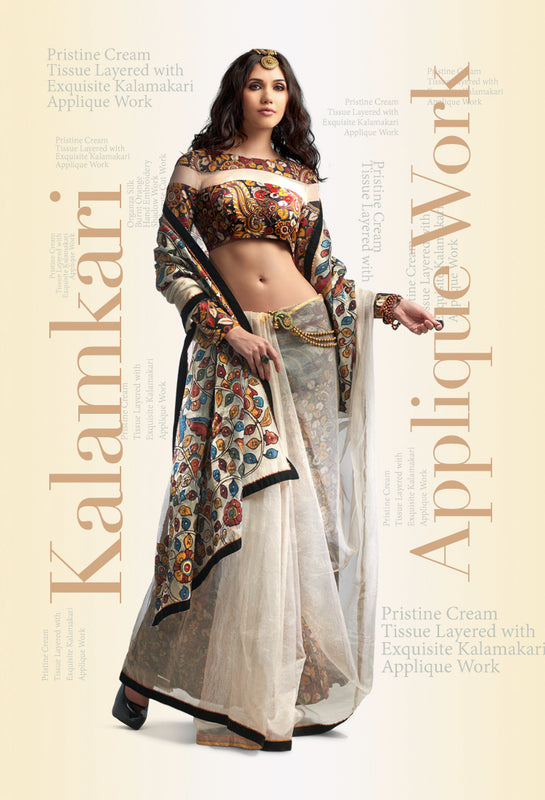
Literally meaning drawing with a pen, sarees featuring the kalamkari craft have been adorned by women over the ages. There are two distinct styles of kalamkari - Srikalahasti and Machalipatnam. The fabric gets its glossiness from its immersion in milk and resin. Kalamkari fabrics are created in seventeen steps, using only natural dyes, with numerous washes. Typically, the motifs capture the essence of temple architecture and scenes from great epics. The muted kalamkari motifs in maheshwari silk or cotton are appliqued onto rich vibrant kanchivaram silk. One can also find this work of art handcrafted on tussar silk, crepe, chiffon, georgette and cotton. Kalahasti and Masulipatnam located in the state of Andhra Pradesh in south India are well known for various forms of kalamkari. Sakhi borrows from this craft and brings alive the soul of kalamkari with fashionable designs.
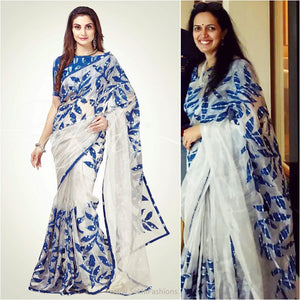
Whether it is for an evening out or to make one feel beautiful during the day, cut work is a form of fine needlework that complements any hour. In this form of embroidery, portions of the background fabric are cut away and the edges worked over in buttonhole stitches. The applications of this craft include bold elaborate pallus with understated borders hand embroidered with cut work, or unique combinations with complementing block prints. Kerala in south India along with the Banaras and Bengal regions in north India are well known for cut work. Sakhi celebrates cut work on sarees and salwars, adding verve by infusing cut work with tissue applique, to make every occasion special.
A very subtle and interesting form of embroidery, shadow work uses sheer fabric in a manner wherein only the bare outline of a pattern appears on the surface, revealing the crisscrossed threads underneath, creating a shadow pattern. It is the opacity of the threads, worked on translucent sheer fabric, which defines this form of embroidery. The herringbone stitch reverses the shadow stitch by inverting the right side, revealing the actual thread in place of the shadow. Shadow work appears both delicate and intricate. Sakhi uses this effect in a variety of ways, making its garments versatile and stylish.
One of the earliest and simplest methods of textile printing, Block printing is, very simply put, the printing of patterns on textile using incised wooden blocks. Block printing involves myriad steps, but the most important step is the preparation of the block which determines the quality and clarity of impressions. The block is then dipped in the desired dye and carefully placed adjacent to the preceding impression of the block as per the design. Block print is popular across many Indian states, each region being known for its own, unique variant. Sakhi gives a contemporary twist to block print by combining modern graphic designs with traditional Indian motifs. The key differentiating elements of the designer ensemble are the hues used in varied colour themes.
This craft features minute sequins placed carefully on fabric and stitched by hand. Sequins are glass-like, fragile, decorative elements available in numerous shades featuring either reflective or matte effects. Sakhi weaves this craft in an unconventional fashion on a range of fabrics. Sequins and mirror work, in combination with hand-block print or cut work among other crafts, gives rise to interesting, unique creations.
The use of metal to embellish textiles has been immensely popular since the Mughal era. Badla is one such ancient technique, where a flattened metal strip (badla) is either laid on the surface of the fabric or by employing a technique called mukesh, and embroidered through the fabric using its pointed end in place of a needle. This intricate craft recreates a starry night sky when used in combination with black flowing chiffon or flamboyant organza silk.
An innovative technique by which patches of contrasting fabrics are superimposed on a base fabric, applique work requires the edges of the patches to be sewn using various embroidery stitches. The base cloth is usually coloured, combined with printed or contrasting applique material. The choice of thread used can also serve to elevate the colour theme. This craft can also be combined with mirror work, badla or mukesh to add an element of sparkle.
The word ari comes from the hooked needle used in a form of embroidery called aar. It is similar to the one used in crochet. The fabric is first fixed over a frame, usually made from bamboo, on which a pattern is traced and intricately embroidered using a needle with a hooked end using either zari (gold or silver) or silk thread. Ari appears to be a fine chain stitch. The secret of exquisite ari workmanship is the uniform tension of the thread, maintained throughout. After embroidery, the stitches are beaten using a wooden mallet on to a handheld wooden anvil placed under the fabric.
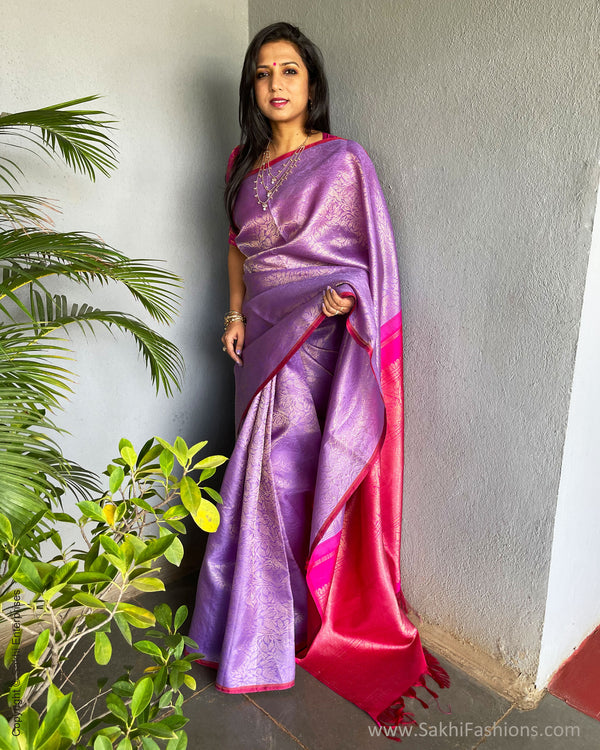
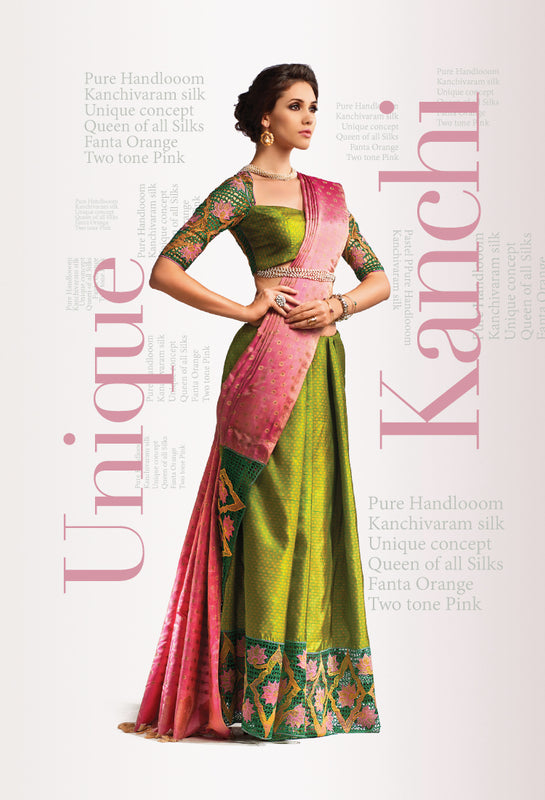
One of the superior silk fabrics in the world, kanchivaram is woven by skilled weavers from the famed temple town of Kanchipuram. The designs on this luxurious silk reflect finely crafted motifs inspired by the temples of Tamil Nadu.
With silk thread dipped in liquid gold and silver, these glorious motifs are brought to life by the gifted hands of artisans. Sakhi pays tribute to the age-old tradition of adorning kanchivaram silk, with a contemporary twist that suits the modern woman.
This pure silk is a light weight fabric, perfect for an evening out or a sunny summer day. The effervescent chiffon is a light, sheer fabric with a rich shimmer and a mild, granular texture. The twist in the yarn creases the fabric gently in both directions, giving it a slightly textured feel. Sakhi mingles featherlike chiffon with different designs to create stunning sarees.
Crepe features among the most popular fabrics made from silk yarn. The softer version of crepe is called 'crepe the chine'. Lustrous in visual appeal, crepe silk has a glamorous sheen and an excellent drape. It has a slippery smooth texture, with a crisp appearance. Crepe is woven from hard spun yarn in its natural condition. The fabric, when woven, is smooth and even. Once the resin is extracted, the fabric becomes soft, giving it a crimpy look. Sakhi uses this comfortable-to-wear, fluid silk to create designs that can be worn at all times.
Another member of the pure silk family, georgette is a variant of pure crepe silk. The translucent nature of the fabric makes it well-suited for an evening out or a spring day. Georgette has a gauzy feel and comes in different grammages which contribute to the elegant fall of the fabric. These pure fabrics have an excellent ability to absorb colour, offering numerous colour permutations to the designer. At Sakhi, one can find georgette, sporting elegant hand-block prints, also featuring mild hand embroidery.
Also known as kosa silk, tussar silk is highly valued for its purity and linear weaving texture. This type of silk is drawn from cocoons especially cultured on Arjun, Saja or Sal trees. Tussar silk is available naturally in shades of muted gold and mild beige.
Tussar silk is considered ideal as well as auspicious for marriages, religious ceremonies and other functions. Sakhi uses tussar in its original hue in addition to dyeing the rich gold shade in wonderful colours with beautiful motifs, to make it suitable for today's woman.
Tussar, in combination with natural dyes like pomegranate, flower and fruit extracts exudes an understated yet classy elegance. Tussar also finds a special place in designer Chandra's collection as it is one of her favourite fabrics.
TA sheer, feather-like open weave fabric that is mildly heavier and more crisp than silk gauze, organza silk is traditionally made from the continuous filament of silkworms.
IIt has a smooth, flat finish and sports a characteristic shine, obtaining its stiffness from tightly twisted yarns. At Sakhi, organza silk finds its way into day and evening wear designs. The use of intricate hand embroidery on this preciously delicate silk makes it the epitome of elegance.
The soft, staple fibre that grows around the seeds of cotton, the tropical and subtropical shrub, produces this popular fabric. Cotton has an ease which lets the skin breathe well. Cotton has an excellent ability to absorb colour, which helps it manifest itself in myriad hues.
At Sakhi, one can find cotton in all its simplicity, with a simple elegant border, enhanced by thread work. But the ones most sought after are the weaving wonders, pure silk borders in vibrant hues with a contrastingly modest cotton body. This special weaving technique is called 'Korvai', wherein different base fabrics are interwoven. Embellished with innovative block print motifs, cotton takes on a new life.